Date of Visit: May 7, 2025

Mt. Fuji is not only a beautiful mountain—it’s also a sacred symbol in Japan.🗻
Many travelers come to see Mt. Fuji for its beauty, but not everyone knows about the spiritual world that surrounds it.
At the foot of this majestic peak stands Fujisan Hongū Sengen Taisha, a shrine full of history, tradition, and quiet beauty.
Surrounded by nature and filled with spiritual energy, it’s a perfect place to experience the spirit of traditional Japan.
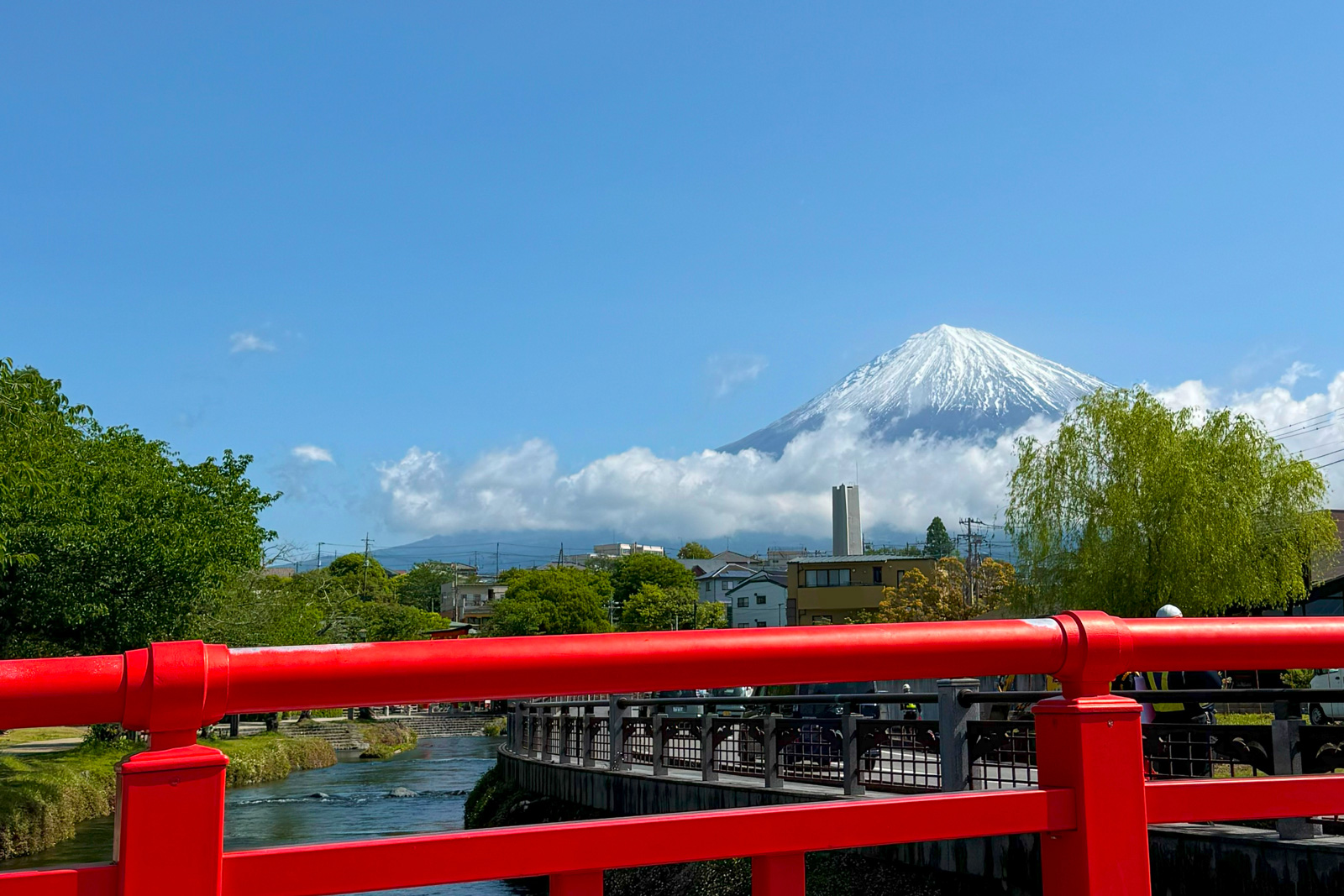
In this post, I’ll take you on a gentle journey to explore Fujisan Hongū Sengen Taisha — a sacred shrine at the foot of Mt. Fuji with deep roots in Japanese culture and history.
The Sacred Shrine at the Foot of Mt. Fuji

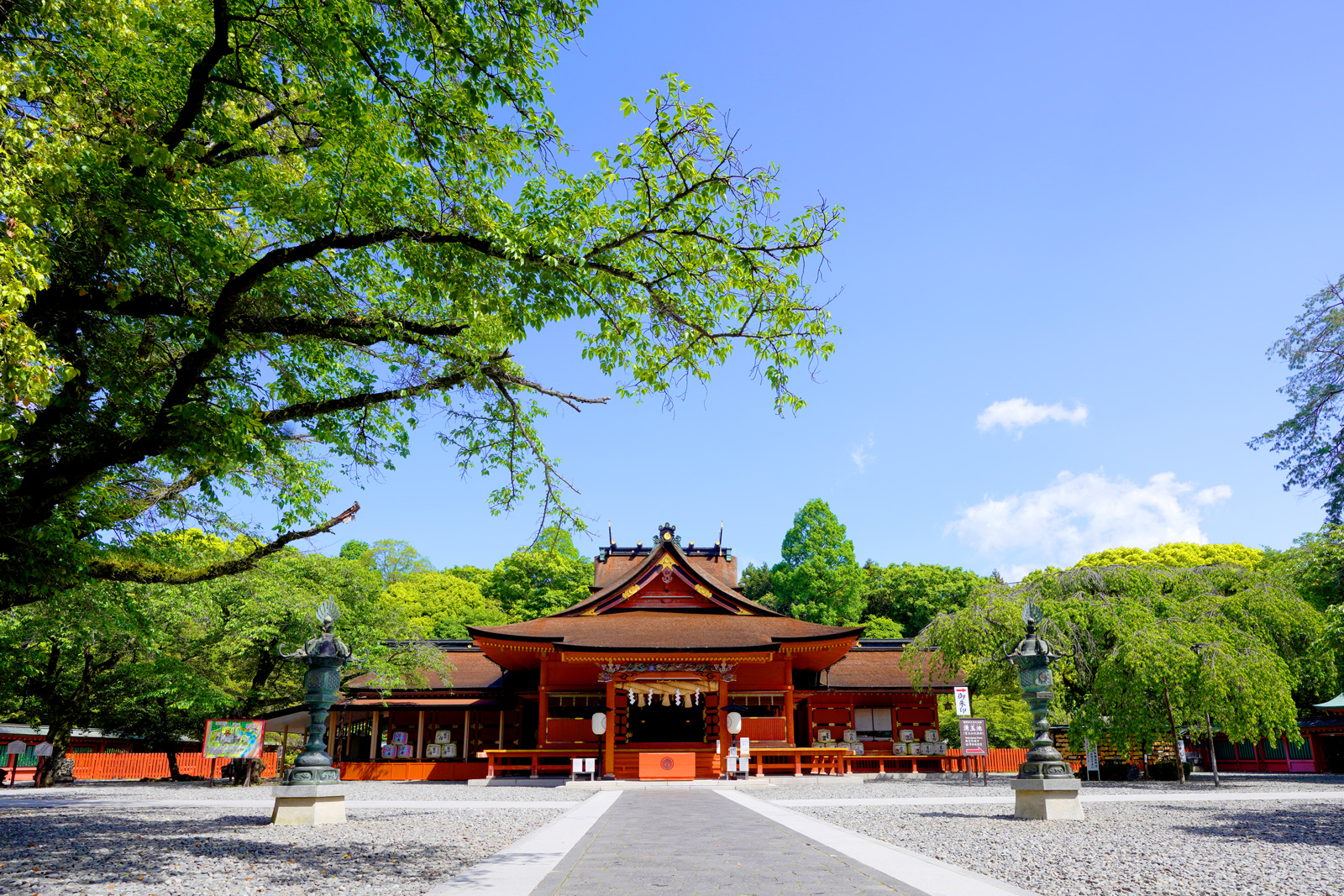
Located at the foot of Mt. Fuji in Shizuoka Prefecture, Fujisan Hongū Sengen Taisha serves as the head shrine of more than 1,300 Sengen shrines throughout Japan.
It is also the Ichinomiya (the highest-ranking shrine) of the old Suruga Province, which makes it a very important and respected place.
By the way, have you ever heard of Suruga Province?
Fujisan Hongū Sengen Taisha
『ふじさんほんぐうせんげんたいしゃ』

‘Fujisan(ふじさん)’ means ’Mt. Fuji’ in English.
The Ichinomiya of Suruga Province
If you’re somewhat familiar with Japanese prefectures, you might be thinking, “Hmm… I’ve never heard of that.”
And you’re right!
Long ago, Japan was divided into many regions called kuni, which are translated as “provinces” in English.
Each province had a very special shrine called an Ichinomiya.
An Ichinomiya was the highest-ranking shrine in each province under Japan’s old regional system, and many of them are still respected and worshipped today.
Fujisan Hongū Sengen Taisha is famous because people believe it helped calm the eruptions of Mt. Fuji. Because of this, people have come to trust and pray at this shrine for hundreds of years.
In fact, as the worship of Mt. Fuji grew across Japan, over 1,300 shrines called Sengen shrines were built in honor of this faith, and Fujisan Hongū Sengen Taisha is regarded as the head shrine — the very first and most important one.
When you visit, you’ll feel the peaceful atmosphere surrounded by nature — and if you’re lucky, you might catch a beautiful view of Mt. Fuji itself.
It’s a wonderful place to learn about Japan’s history, culture, and the deep respect people have for this sacred mountain.
Where in Japan is this shrine?
You probably already know that Mt. Fuji is one of the most famous mountains in the world.
But have you ever thought about where it is in Japan?
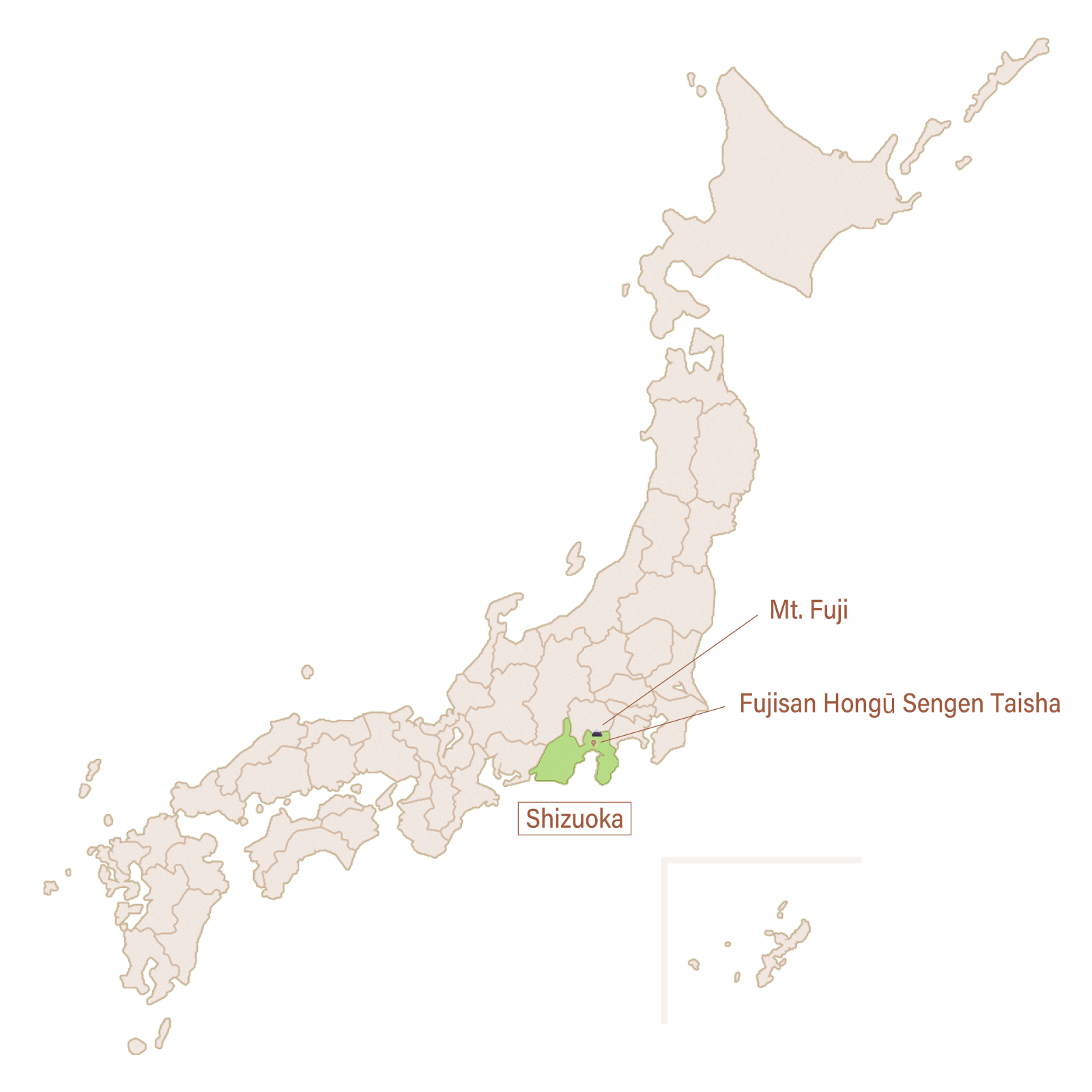
Actually, Mt. Fuji lies on the border between Shizuoka and Yamanashi prefectures.
The shrine I’m sharing with you in this post is located on the Shizuoka side.
If you take a look at a map, you’ll see that Shizuoka is in the central part of Honshu, Japan’s main island. It’s on the Pacific coast and offers some stunning views of Mt. Fuji from the south.
Take a look at the map below!
The Deities Enshrined in This Shrine
Did you know that each Shinto shrine has its own special deity—or sometimes even more than one?
These deities are called Gosaijin (御祭神), which means “enshrined deity or deities.” They are the sacred beings that the shrine is dedicated to and honored through its rituals and traditions.
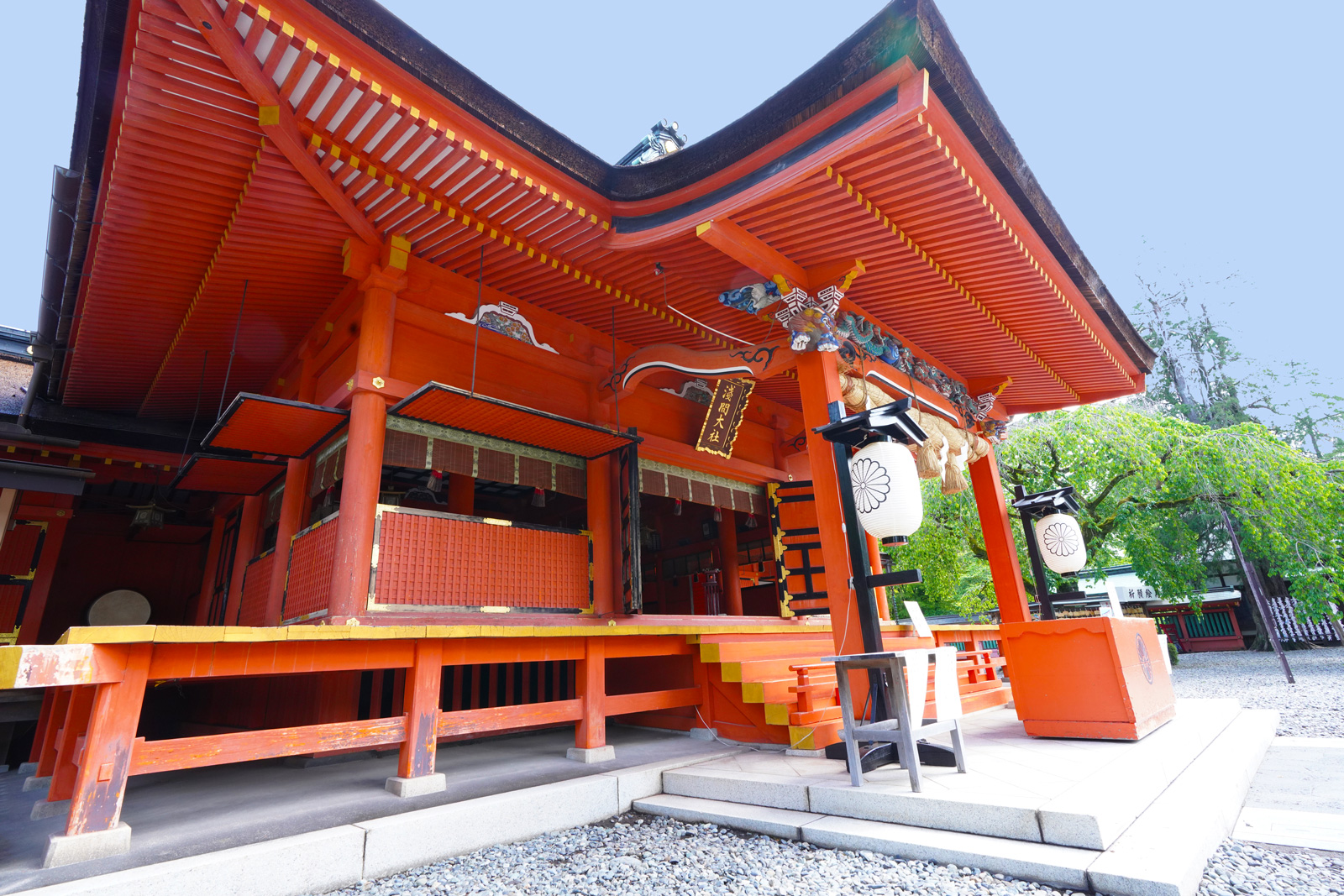
Fujisan Hongū Sengen Taisha is home to three deities.
I’d love to introduce them to you so you can learn more about this special place.
The Main Diety
The main deity enshrined at Fujisan Hongū Sengen Taisha is Konohana-no-sakuyahime-no-mikoto, also known as Asama-no-Ōkami.
🌸木花之佐久夜毘売命:Konohana-no-sakuyahime-no-mikoto
There are several ways to write and pronounce the name of this goddess, but in this post, I’ll introduce the version used at Fujisan Hongū Sengen Taisha.
She is the goddess of Mt. Fuji and is believed to protect the mountain from volcanic eruptions.
Konohana-no-sakuyahime-no-mikoto
『このはなのさくやひめのみこと』
The Deity Behind the Cherry Blossoms
Konohana-no-sakuyahime-no-mikoto is known for her extraordinary beauty and is one of the most important deities in Japanese Shinto mythology.
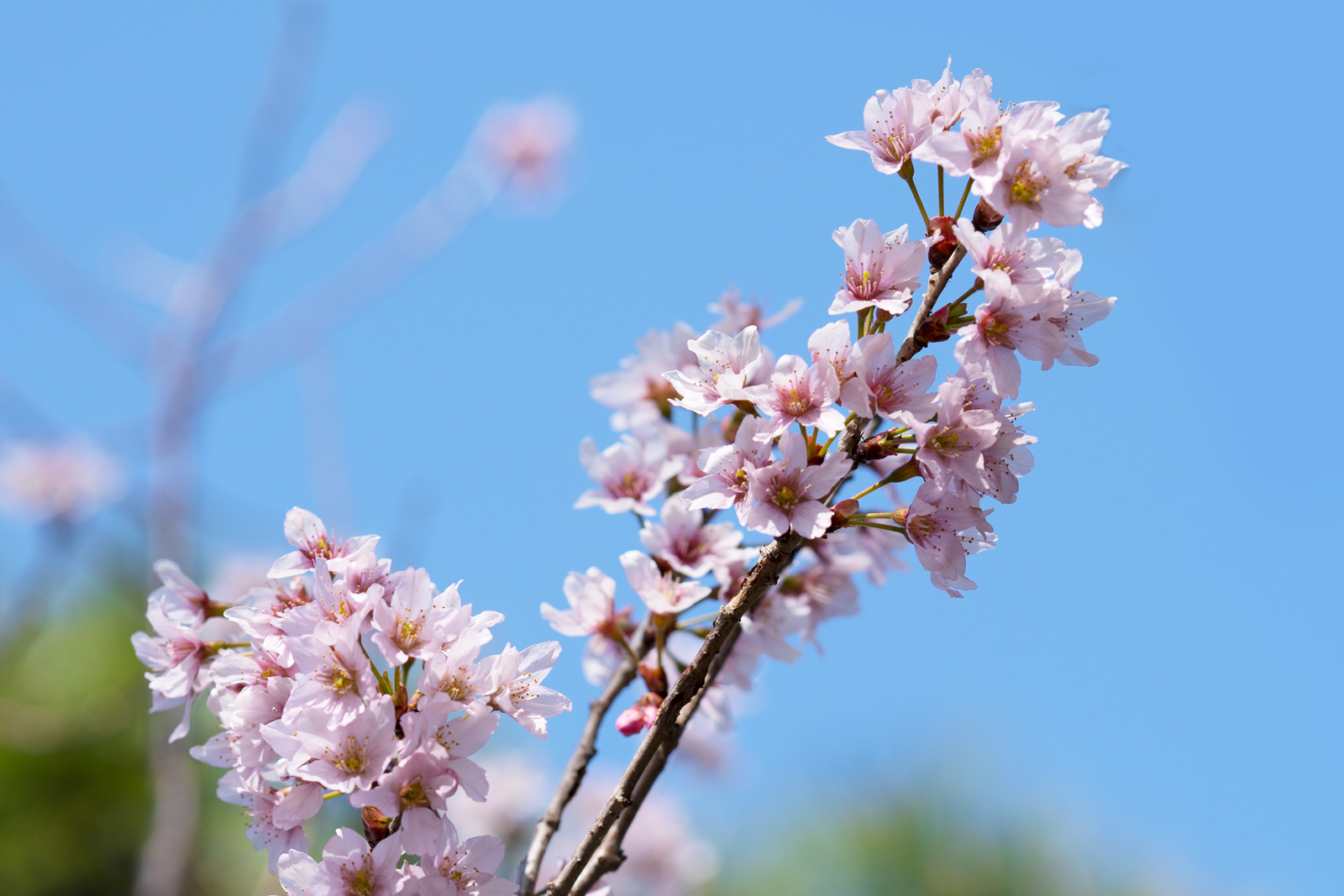
Her name contains “木花 – Konohana,” which means “tree blossoms,” and her full name carries the beautiful meaning of “Princess who makes blossoms bloom“—which is why cherry blossoms are considered sacred to her.
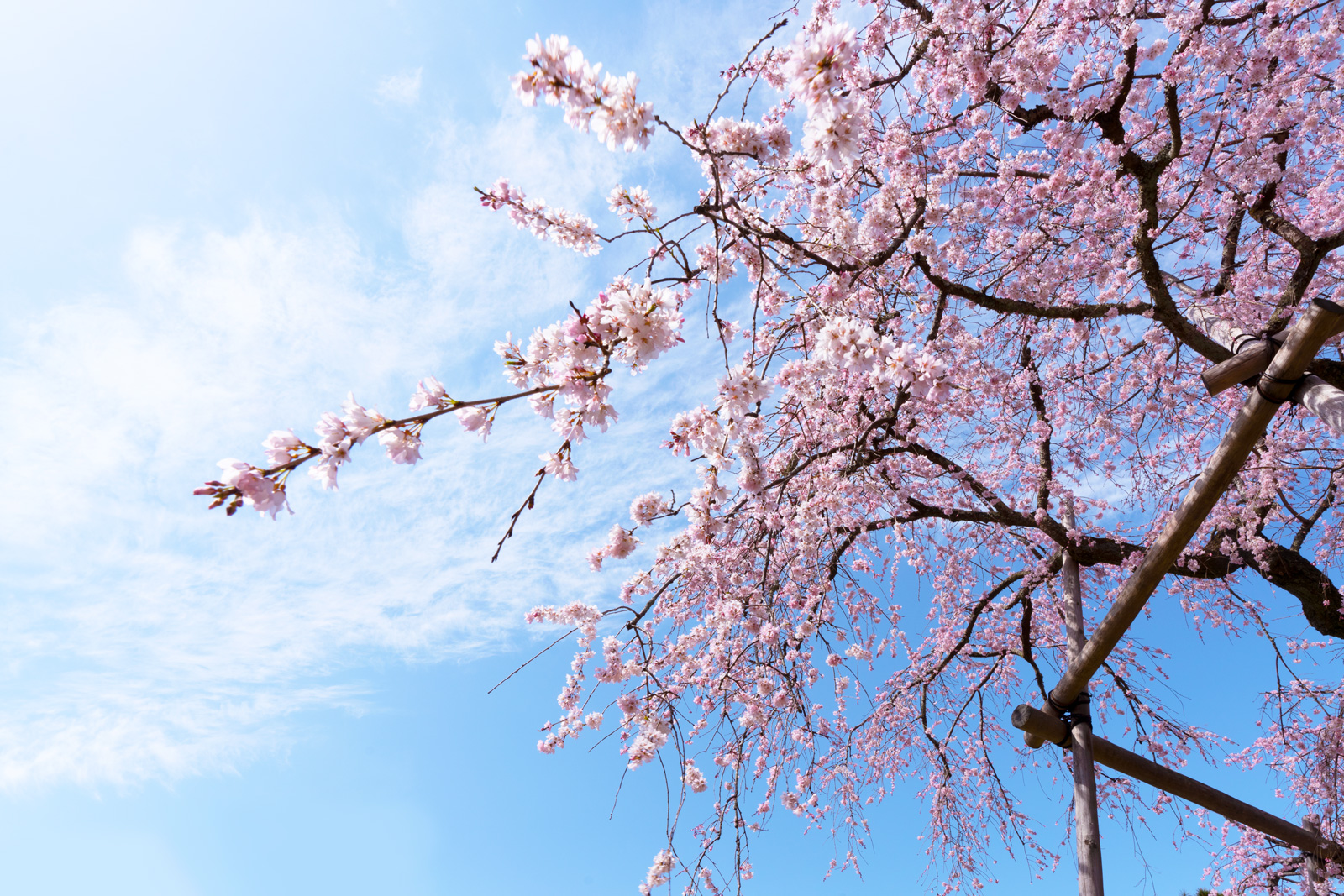
Actually, the shrine grounds are home to about 500 cherry trees, making it a wonderful place to visit in spring when the blossoms are in full bloom. It’s truly a magical sight!
If you’ve ever been moved by the sight of sakura (cherry blossoms) petals dancing in the wind, you might have felt her presence.
Why is She So Special?
You might wonder why Konohana-no-sakuyahime-no-mikoto is so widely revered in Japan.
Let me share her story from Japanese mythology.
Konohana-no-sakuyahime-no-mikoto is the daughter of Oyamazumi-no-kami, the great mountain god. Later, she became the wife of Ninigi-no-mikoto, the grandson of the sun goddess Amaterasu—and a divine ancestor of Japan’s imperial family.
She was famous across the heavens for her breathtaking beauty. It was this radiance that caught the eye—and the heart—of Ninigi-no-mikoto.
However, when she became pregnant, her husband began to doubt her faithfulness. To prove her innocence and the legitimacy of her children, she made an incredible decision that has since become legendary.
She built a birthing hut with no doors, went inside, and set it on fire. She declared, “If my children are truly divine, they will be born safely—even through the flames.”
And unbelievably, she gave birth to three healthy sons right there in the burning hut! This dramatic proof of her purity and divine nature silenced all doubts.
This amazing story has inspired Japanese people to respect and admire Konohana-no-sakuyahime-no-mikoto for her graceful beauty, courage, and unwavering strength.
She teaches us to appreciate beauty, live with grace, and stay true even in difficult times.
This legendary goddess has been revered for centuries in Japan as a protector of:
- Family harmony
- Marital bliss
- Safe childbirth
- Child protection
- Fire prevention
- Maritime safety
- Fisheries
- Agriculture
- Weaving
and so on.
Konohana-no-sakuyahime-no-mikoto’s story continues to inspire people today, reminding us of the power of faith, beauty, and resilience in our own lives.
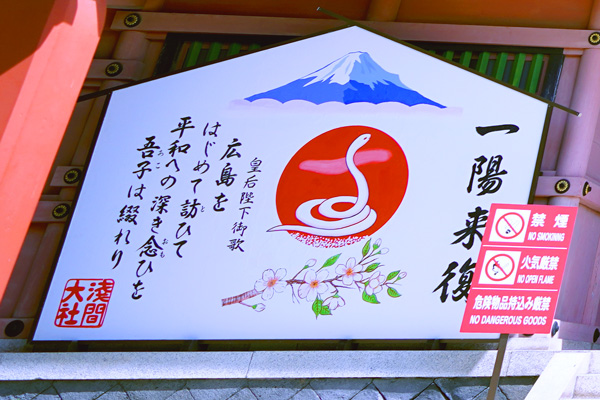
Did you notice the large ema (wooden wishing plaque) with a white snake painted on it in the lower left of the first photo I posted?
In Japan, we have a traditional zodiac system called the Juunishi (十二支), or the Twelve Zodiac Animals. This is based on the Chinese system but has developed its own cultural meaning over time.
Each year is represented by a different animal, and this year (2025) is the Year of the Snake. That’s why you can see this big ema featuring a white snake.
The white snake is also considered a sacred creature in Japanese culture, often associated with good luck and protection.
This ema is displayed at the entrance gate of Fujisan Hongū Sengen Taisha, which is dedicated to Mt. Fuji and the goddess Konohana-no-sakuyahime-no-mikoto.
Isn’t it lovely how both Mt. Fuji and the cherry blossoms—symbols of the goddess—are beautifully painted on it?
Other Deities
- 瓊々杵尊:Ninigi-no-mikoto
- 大山祇神:Ōyamazumi-no-kami
Alongside her, two other deities are also worshipped: Ninigi-no-mikoto, her husband, and Ōyamazumi-no-Kami, her father.
In Japanese mythology, Ninigi-no-mikoto is a heavenly prince sent down to earth to rule Japan, and Ōyamazumi-no-kami is the god of mountains and nature.
Ōyamazumi-no-Kami, the father of Konohana-no-sakuyahime-no-mikoto, is known as the great god of mountains in Japanese mythology.
While he does not have a direct connection to Mt. Fuji, he is worshipped alongside his daughter as part of the broader tradition of mountain spirituality.
Goshuin from Fujisan Hongū Sengen Taisha
Did you know you can collect unique calligraphy at shrines in Japan?
It’s called goshuin (御朱印―ごしゅいん).
Goshuin are like spiritual passport stamps that you can receive at shrines and temples in Japan. They serve as both a record of your visit and a meaningful spiritual souvenir.
Whenever you look at a goshuin after your visit, it transports you back to the date and place where you visited that particular shrine or temple. Many people in Japan collect goshuin, and I’m one of them!
Here is my goshuin I received from Fujisan Hongū Sengen Taisha.
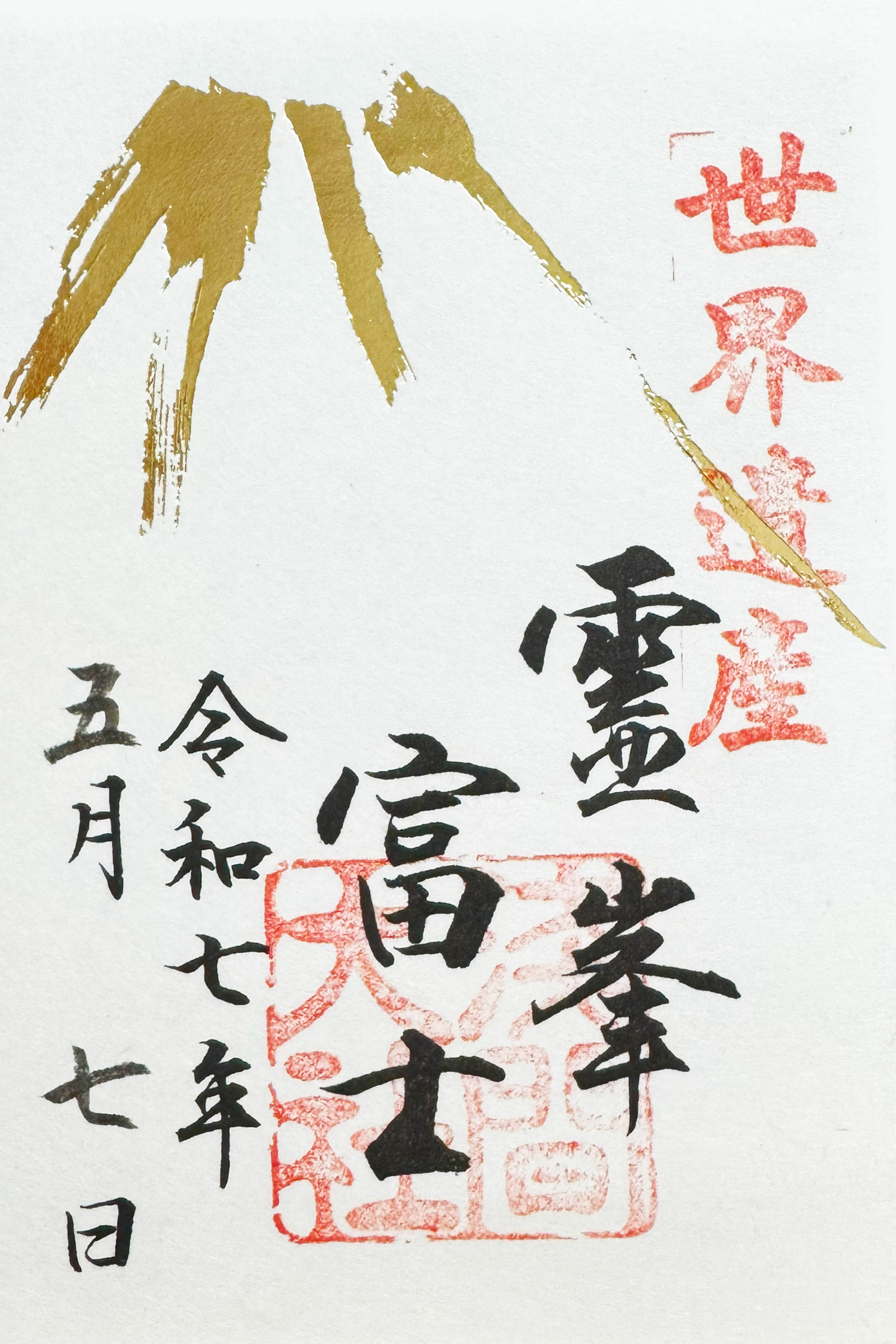
It features Mt. Fuji in golden debossed relief. On the right, four kanji characters “世界遺産” are stamped vertically in red ink, meaning “World Heritage.”
Mt. Fuji is not just a mountain—it feels alive or spiritually present, watching over the shrine and its surroundings.
Collecting goshuin is a wonderful way to create lasting memories of your shrine visits!
Access & Information
| Location | 1-1 Miyamachi, Fujinomiya City, Shizuoka Prefecture 418-0067 |
| How to Get There | (1) 30 minutes by taxi from Shin-Fuji Station (Tokaido Shinkansen) (2) 10-minute walk from Fujinomiya Station (Minobu Line) |
| Opening Hours | November – February: 6:00 AM – 7:00 PM March & October: 5:30 AM – 7:30 PM April – September: 5:00 AM – 8:00 PM |
| Goshuin Office Hours | 8:30 AM – 4:30 PM |
Information is current as of May 2025.
For the latest information, visit the official website of Fujisan Hongū Sengen Taisha.
Fujisan Hongū Sengen Taisha is well known as a popular cherry blossom viewing spots, so I’d love to come back again in spring to see the shrine beautifully surrounded by blooming sakura.🌸
I hope one day you can visit and experience the calm and beauty of Fujisan Hongū Sengen Taisha for yourself.