
I got interested in Japan and started learning kanji 😄🖋️
I’m a big fan of kanji 😍🔥

If this sounds like you, thank you so much for your interest in Japan 🌸✨
Kyoto is full of beautiful place names written in kanji—but can you read them?
In this quiz, you’ll explore some of Kyoto’s most famous spots through their kanji. Even if you already know a bit of Japanese, place names can be surprisingly tricky. The readings aren’t always what you expect, and that’s part of the fun 😆🌟
Take your time, enjoy the shapes and meanings of the characters, and see how many you can guess 🤔
Along the way, you’ll also find helpful travel insights related to each kanji—perfect for making your visit to Kyoto even more enjoyable ⛩️🍵🌸

Ready to give it a try?
Kyoto Kanji Quiz Q1
Here’s your first challenge!
祇園

These two kanji appear in the name of one of Kyoto’s most famous festivals 👘🏮
Can you read them?
Check Your Answer & Discover More!
Ready? Tap / Click to check your answer!
ぎおん [Gion]
How did it go?
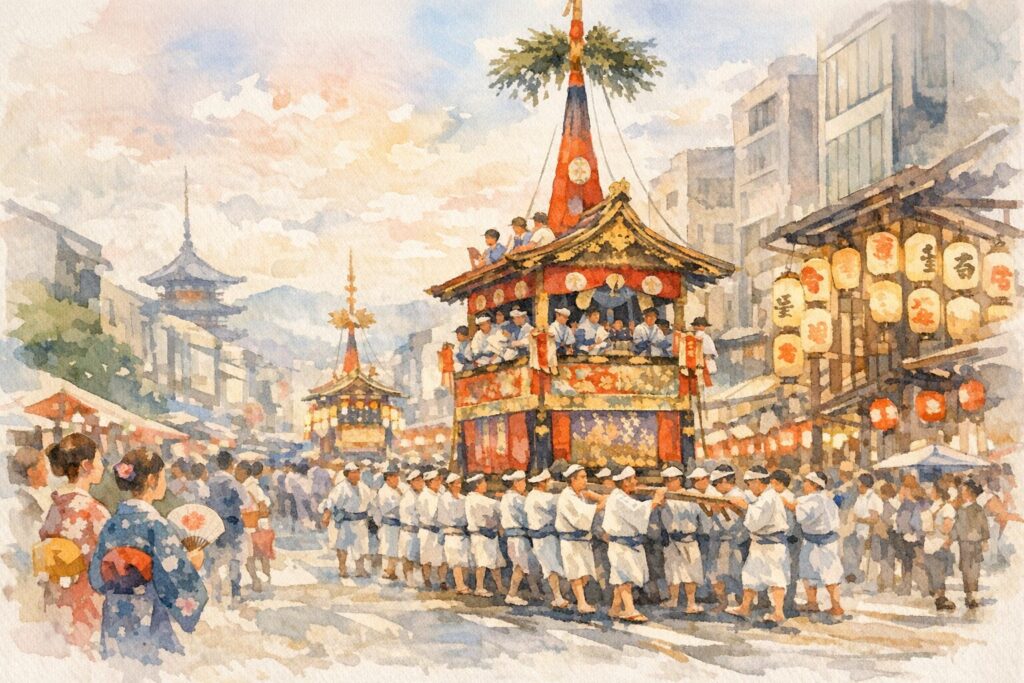
That’s right — it’s the same Gion as the world-famous Gion Festival! The kanji gently evoke the vibrant, historic heart of Kyoto where one of Japan’s most spectacular summer festivals has been celebrated for over 1,100 years.
The Gion Festival is one of Kyoto’s three major festivals, and it’s incredibly well-known. Have you ever been?
The festival is held every July in Kyoto and is one of the most celebrated festivals in all of Japan. With a history stretching back over 1,100 years, it began as a religious ritual at Yasaka Shrine to ward off plague and disaster. Today, the festival spans the entire month of July, drawing visitors from across Japan and around the world.
The highlight of the festival is the grand procession of yamaboko floats — towering, beautifully decorated wooden structures that are pulled through the city streets. The two main processions, held on July 17th and 24th, are a breathtaking sight, with participants dressed in traditional clothing accompanying the floats.
In 2009, the Gion Festival was inscribed on UNESCO’s Intangible Cultural Heritage list, a recognition of its deep cultural and historical significance.
Kyoto Kanji Quiz Q2
Ready for the next one?
花見小路

These three kanji together make up the name of one of Kyoto’s most iconic streets.
Check Your Answer & Discover More!
Ready? Tap / Click to check your answer!
はなみこうじ [Hanamikoji]
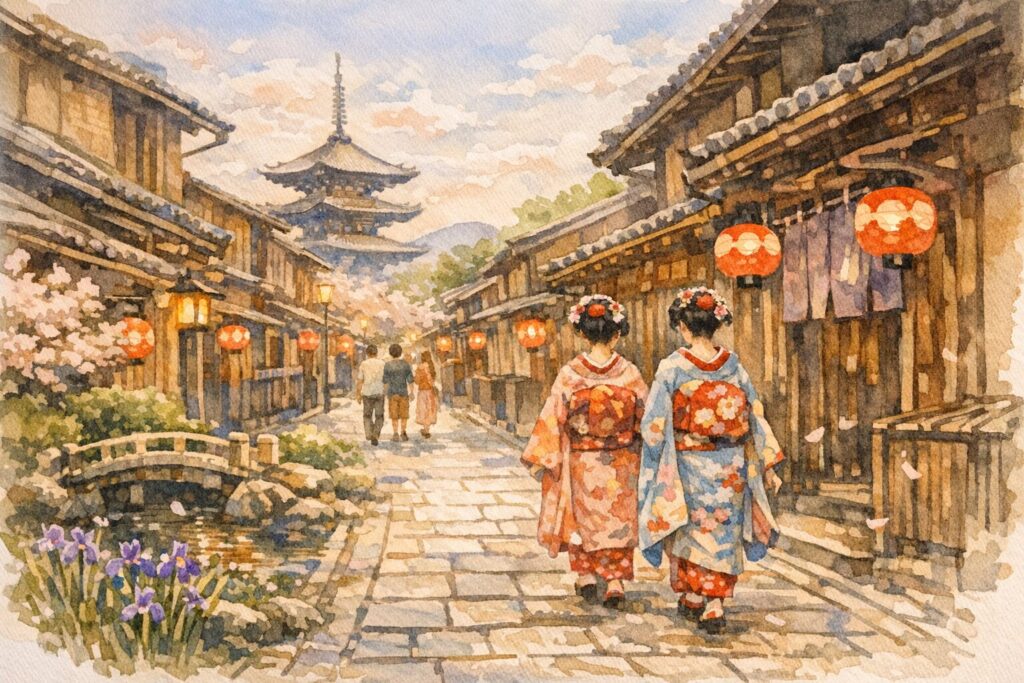
Did you get it? The kanji paint such a beautiful picture, don’t they? They gently suggest the graceful, elegant world of Gion’s historic geisha district and the cozy charm of this narrow little street filled with traditional teahouses. It’s just as lovely as it sounds!
Hanamikoji Street is one of the most famous streets in Kyoto’s Gion district, and its name is just as beautiful as the street itself. Written with the kanji for flower (花), viewing (見), and small path (小路), the name evokes the graceful charm of Gion’s historic geisha quarter.
Walking along this stone-paved street feels like stepping into another era entirely — with its traditional teahouses quietly lining the lane, it’s full of timeless elegance and atmosphere.
Hanamikoji is especially known as the heart of Kyoto’s ochaya culture — the world of traditional teahouses where geiko and maiko entertain guests. In the early evening, it’s not uncommon to catch a glimpse of a maiko gracefully making her way to an appointment, her kimono flowing gracefully around her. It’s one of those rare places in Kyoto where history feels wonderfully alive.
Kyoto Kanji Quiz Q3
Here comes challenge number three!
清水

This is a tricky one! These two kanji together form the name of one of Kyoto’s most beloved landmarks.
Check Your Answer & Discover More!
Ready? Tap / Click to check your answer!
きよみず [Kiyomizu]
How did it go? If you’re into kanji, you might be thinking, ‘Wait, isn’t this pronounced shimizu?’ And you’re totally right! There are actually two ways to read it. While shimizu is the more common way, here in Kyoto, you’ll mostly hear it as kiyomizu, after Kiyomizu-dera Temple. Knowing both makes you a real kanji pro, don’t you think?
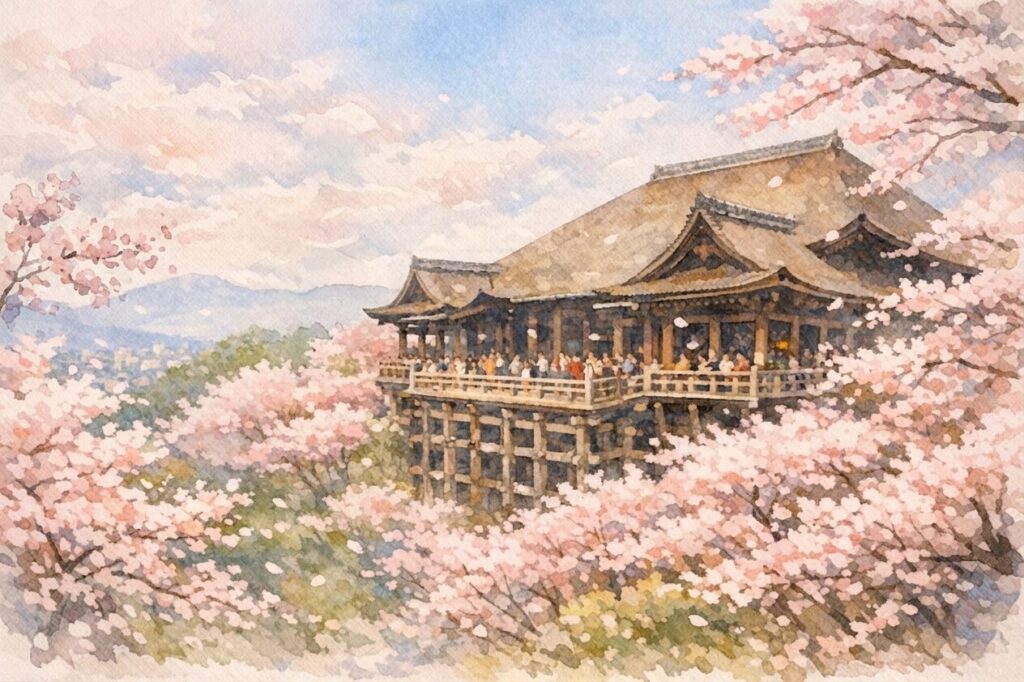
Kiyomizu literally means “pure water,” written with the kanji for clear (清) and water (水). The name comes from the Otowa waterfall that flows beneath Kiyomizu-dera Temple, which has been a place of worship and wonder for over 1,200 years. It’s one of those names where the meaning and the place feel perfectly matched.
Kiyomizu-dera is perched on the hillside of Higashiyama and is perhaps one of the most recognizable temples in all of Japan. Its famous wooden stage, built without a single nail, extends out over the hillside and offers a sweeping view of the city below. Whether you visit in spring cherry blossoms or autumn leaves, the scenery is simply breathtaking.
Kyoto Kanji Quiz Q4
Up next — are you ready?
烏丸

These two kanji make up the name of one of Kyoto’s most important streets.
Check Your Answer & Discover More!
Ready? Tap / Click to check your answer!
からすま [Karasuma]
Did you get it? At first glance, you might see ‘Bird’ (鳥) and ‘Circle’ (丸), but look closer—it’s actually the kanji for Crow (烏)!
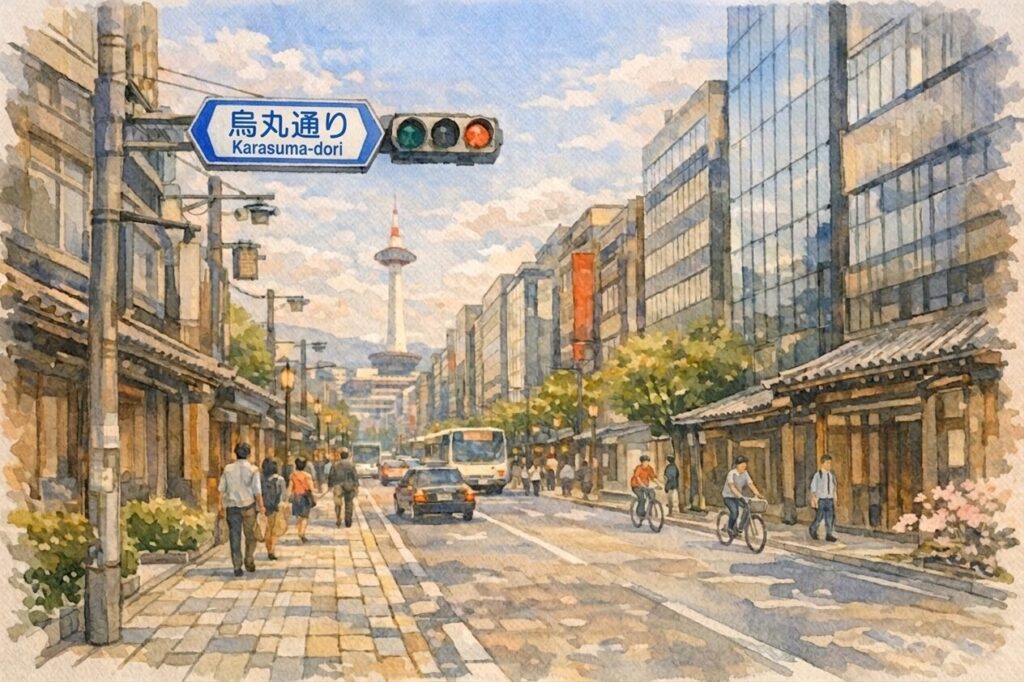
Karasuma is one of Kyoto’s main north–south streets, running through the heart of the city. While the kanji 烏 (crow) and 丸 (circle) might seem puzzling together, place names in Kyoto often come from historical references, family names, or old landmarks that are no longer visible today.
The name is believed to be connected to aristocratic residences or old estate names from the Heian period, though the exact origin isn’t perfectly confirmed.
Today, Karasuma is a modern, busy area lined with offices, shops, and cafés—but its name still carries a quiet echo of Kyoto’s layered past.
Kyoto Kanji Quiz Q5
And here’s the last one!
You’ve got this!
御所

These two kanji refer to a very special place in Kyoto — one that was once at the very center of Japanese history.
Check Your Answer & Discover More!
Ready? Tap / Click to check your answer!
ごしょ [Gosho]
Were you close? This is a word that carries a lot of history in just two kanji! The kanji give a sense of something noble and important—almost like stepping into a place with deep history and formality.
“Gosho” refers to the Kyoto Imperial Palace, where the Emperor of Japan lived for many centuries before the capital moved to Tokyo in 1869. The kanji ‘御‘ adds a respectful tone, while ‘所‘ means “place,” so together they suggest a highly honored residence.
Kyoto Gosho is located within a large park called Kyoto Gyoen National Garden, and visitors can explore its spacious grounds and traditional architecture. The name itself reflects Kyoto’s long history as the imperial capital, and even today, it carries a sense of dignity and cultural importance that goes beyond just a physical location.

So, how did you do? How many did you get right?
Take These Kyoto Kanji With You
Kyoto’s place names are a wonderful mix of history, culture, and language. Some readings may have felt unexpected, but each one carries a story that reflects the city’s long past.
🔖 Here’s a quick review of today’s kanji 😺🧡
- 祇園-ぎおん (Gion)
- 花見小路-はなみこうじ (Hanamikoji)
- 清水-きよみず (Kiyomizu)
- 烏丸-からすま (Karasuma)
- 御所-ごしょ (Gosho)
If any of these surprised you, that’s completely normal—Japanese place names often have unique readings shaped by history and tradition.
Next time you visit Kyoto, you might find yourself recognizing these names and seeing the city in a whole new way 😺💖